Recap: Rare Disease Week on Capitol Hill
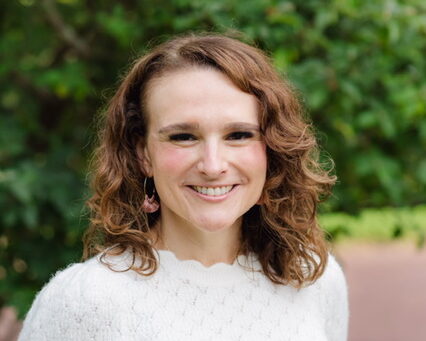
Kate Racoff Musgrove, PhD was one of eleven LAM advocates who traveled to Washington, DC for Rare Disease Week, February 23–28. As a woman living with LAM and a dedicated advocate, Kate brought both expertise and lived experience to Capitol Hill.
During the week, The LAM Foundation invited Kate to take over our Instagram stories, offering a behind-the-scenes look at the event through her perspective. She shared real-time reflections on legislative priorities, community connections, and what it means to turn personal experience into policy action. Below, you’ll find Kate’s full recap of the week.
To learn more about Kate’s LAM journey, view this Instagram post. You can follow Kate on LinkedIn for updates on her work as a LAM advocate.
Turning Pain into Policy: Day 1 at Rare Disease Week on Capitol Hill
Wow—what an amazing first day in D.C.! I am so energized after kicking off Rare Disease Week with EveryLife Foundation for Rare Diseases. Today was all about “Sharing Your Story,” but with the intent of turning those stories into actionable change.
Key Highlights: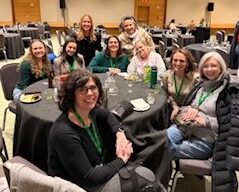
- Federal Insights: I started the day with an informal meeting with Joni L Rutter, Director of NCATS at the NIH, to talk all things rare disease. It’s so encouraging to see federal leadership prioritizing the patient voice in the translational science process.
- The Advocacy Pipeline: The sessions today were masterclasses in impactful storytelling. I was particularly struck by a quote from Amy Gaviglio: “Turning grief into governance; pain into policy; and love into legislation.” It perfectly captures why we are here.
- Identity & Advocacy: A standout session was the “Pride in Rare” conversation with Abbey Hauser and Hannah Yale. Their talk on the intersection of identity and advocacy was a vital reminder that our unique lived experiences shape how we show up as advocates.
- The Power of Connection: This event is such an amazing opportunity to connect. I’m so grateful for the strong The LAM Foundation showing here—there is nothing like the support of your specific disease community—while also building bonds with other rare disease advocates from my home state.
I’m learning that when we anchor our stories in data and community, they gain “policy teeth.” I’m feeling prepared, focused, and excited to see what tomorrow brings!
Preparing for the Hill: Day 2 at Rare Disease Week on Capitol Hill
Today, I attended the 2nd day of the Rare Disease Legislative Advocates (RDLA) event to discuss actionable policy initiatives impacting the rare disease community. It was incredible to see my fellow LAMMIES (other women living with LAM – The LAM Foundation) out in full force advocating for our cause. It was also a privilege to be present as the RareVoice Lifetime Achievement Award was given to Frank Sasinowski. Frank began his career at the FDA in 1983 to help implement the Orphan Drug Act and played a critical role in helping our community navigate the regulatory process to secure the FDA approval of Sirolimus, the first approved treatment for LAM.
The legislative environment is challenging this year, making it essential to present Congress with precise, data-backed priorities to improve therapy development and patient care.
Here are the four primary policy asks EveryLife Foundation for Rare Diseases recommends advocating for on Capitol Hill:
- FDA Rare Disease Innovation Hub (RDIH) Funding: We are requesting $5 million in FY 2027 appropriations. The Hub was established to enhance cross-center coordination (CBER and CDER) but currently operates with only one full-time staff member. Dedicated funding is required to implement its strategic agenda and standardize rare disease review processes.
 Regulatory Predictability and The EXPERT Act: Developing therapies for small populations requires regulatory flexibility, tailored approaches that do not lower statutory standards for safety and efficacy. Unexpected Complete Response Letters (CRLs) issued late in the development cycle have recently halted therapies. We are urging Congress to pass the EXPERT Act (H.R. 1532/S. 822) to establish a Rare Disease Advisory Committee to provide external expertise on these complex regulatory science issues.
- Credit for Caring Act: The US lacks a long-term care program, resulting in a loss of generational wealth. Family caregivers spend an average of $7,200 annually out-of-pocket, roughly 26% of their income. This act provides necessary financial relief to working family caregivers who frequently face reduced hours, depleted savings, and debt.
- Genomic Answers for Children’s Health Act (H.R. 7118): A delayed diagnosis misses critical therapeutic windows and costs the healthcare system up to $517,000 in avoidable expenses per patient. H.R. 7118 is bipartisan legislation that requires National Medicaid coverage for Whole Genome Sequencing (WGS), ensuring access to high-efficacy diagnostic tools regardless of a patient’s home state.
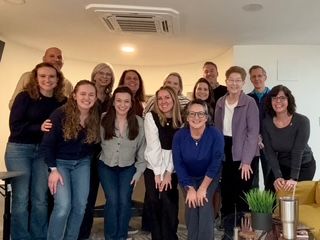
Ended the day with a pre-hill dinner to prepare for tomorrow’s meetings with my fellow LAMMIEs and some husbands (including Dave Gordon).
Advocacy in Action: Day 3 Rare Disease Week on Capitol Hill
Wrapping up an incredible third day on Capitol Hill! It has been a whirlwind of meetings, but the energy is unmatched when you’re surrounded by people who are dedicated to making a difference.
I spent most of my day with an incredible group of advocates from Georgia, like Lauren Hand, Marlene Riera, Shannon Cloud, Rich DeAugustinis, and Cory Lewis to name a few. You all are such a powerful force, representing a wide range of rare disease issues with so much heart and expertise. We spent the day lifting each other up and standing together to push for the legislation our community so desperately needs.
The Legislative Push
While my personal focus was on the SOAR Act, ensuring that the 1.5 million Americans who rely on supplemental oxygen can access the specific equipment, like liquid oxygen, they need to live their lives, I was proud to stand with my peers to advocate for many other critical pieces of legislation, such as:
- Credit for Caring Act: This would provide a federal tax credit of up to $5,000 for working family caregivers to help offset out-of-pocket costs like home modifications, respite care, and assistive technology.
- Genomic Answers for Children’s Health Act (H.R. 7118): A bipartisan bill designed to end the diagnostic odyssey for children on Medicaid by clarifying coverage for life-changing genomic sequencing.
- Rare Disease Innovation Hub (FY27 Appropriation): Requesting $5 million to fully fund the new FDA hub.
Meetings on the Hill

I had the opportunity to speak directly with:
- Houston James from the office of Richard McCormick, MD, MBA
- George Copelan from the office of Barry Loudermilk
- Olivia Abbott from the office of Andrea Salinas, who represents Oregon but was still gracious enough to make time
- Anish Nalla from the office of Representative Hank Johnson
- Tara Jordan from the Office of U.S. Senator Jon Ossoff
- Hannah Oh and Katherine Hagan from the office of Reverend Raphael Warnock for U.S. Senate
The Time is Now
We also attended the Rare Disease Congressional Caucus Briefing, where Senator Amy Klobuchar delivered powerful opening remarks. Her message was clear: the time is now. We cannot wait for progress; we have to drive it.
We ended the day at the Closing Reception, celebrating the successes and connections made throughout the week, with folks like the amazing Annie Kennedy and Abbey Hauser. It’s hard work, but being part of this community makes it all worth it.
Science Meets Accountability at the NIH: Day 4 Rare Disease Week on Capitol Hill
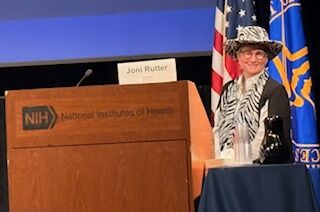
The focus of this year’s Rare Disease Day at NIH was moving from “one-at-a-time” to “many-at-a-time” research to address the 10,867 known rare diseases. With only 500–600 approved treatments currently available, the urgency was palpable. NCATS Director Joni L Rutter set the tone early, reminding us that in our world, “research moves at the speed of participation”.
Key Takeaways:
- Science and Accountability: NIH Director Dr. Jay Bhattacharya described the agency as the location “where our science meets accountability,” emphasizing that research must result in actionable treatments.
- Relationships as Innovation: Dr. Rutter pointed out that “sometimes innovation is not invention but relationships,” highlighting how collaboration is as critical as the technology itself.
- Scalable Platforms: The Platform Vector Gene Therapy (PaVe-GT) Program demonstrated efficiency by using a standardized AAV9 vector and common manufacturing across different diseases.
- Clinical Trial Evolution: The session on trial design pushed for a move away from “Wide and Shallow” models to “Narrow and Deep” assessments, collecting over 100,000 datapoints from cohorts as small as 30 patients to identify biological signals.
- AI Integration: NCATS launched the GARD Intelligent Association Network (GARDIAN) pilot, using the NLM’s TrialGPT to match patients with clinical trials through natural language search.
- AI Diagnostics: Research teams showcased AI models that predicted Acute Hepatic Porphyria and identified IBD patients years before their clinical diagnosis.
- Consortia Requirements: The Rare Diseases Clinical Research Network (RDCRN) 5 launch now requires research teams to study at least three related diseases to maximize impact.
Community-Driven Research:
The community is shifting from advocacy to direct research leadership. Highlights included:
- Cure JM Foundation’s collaboration with Cabaletta Bio to adapt CAR T-cell therapy for Juvenile Myositis.
- Dr. Lauren Testa’s presentation on moving Marfan Syndrome treatments beyond symptom management toward therapeutic genome editing.
Dr. Rutter described this community as “raremarkable”—a fitting label for a group proving that while “rare patients can’t wait,” we are finally building the infrastructure to meet them.