My Week at the NIH: Reflections from Cindy Beasley
For many people living with LAM, a visit to the National Institutes of Health (NIH) can bring a mix of emotions. You may feel hopeful about contributing to research, curious about what the week will be like, or nervous about test results.. Those feelings are completely normal.
Whether you’re preparing for your first visit or simply curious about the NIH experience, we hope her story offers reassurance, insight, and a reminder that every participant plays an important role in advancing research and bringing us closer to a world without LAM.
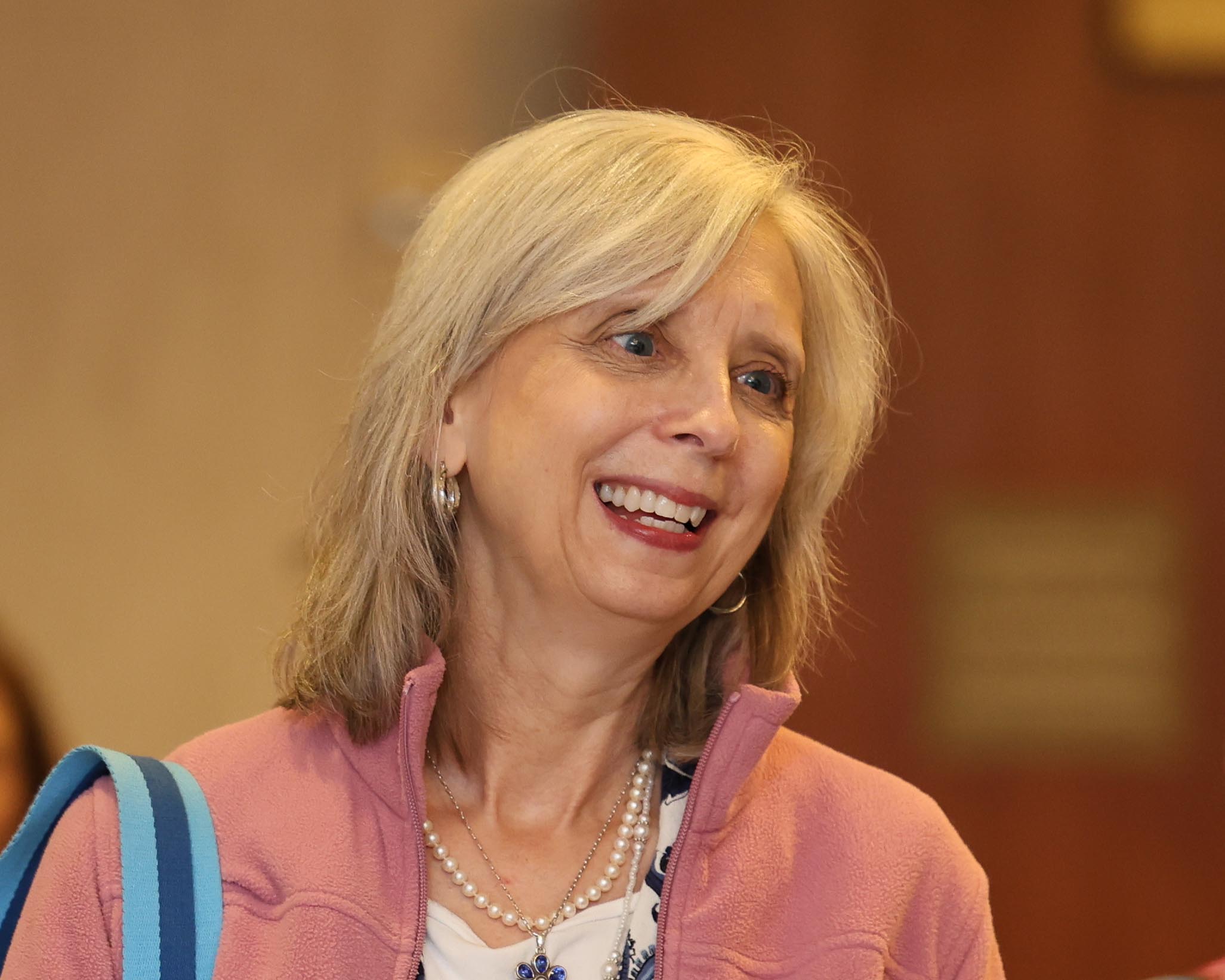
As both the Director of Patient Services at The LAM Foundation and a member of the LAM community, Cindy Beasley recently returned to the NIH to participate in the LAM natural history research protocol. In this personal reflection, she shares an honest look at the experience, from the full schedule of clinical testing to the meaningful conversations with researchers who have dedicated their careers to understanding LAM. Along the way, she found familiar faces, lasting connections, and renewed hope in the progress being made.
Day 1
One of the most important things I see so far is to read the small print. This is a place with lots of people coming and going and they put all of the information into the documents they send. This was especially clear when I went to look up my ride pick up. In the midst of the document I found that the NIH had reserved an Open Taxi for me and provided a number to call. Very easy process, however, “the devil,” as they say, is in the details.
My Open Taxi driver, Nico*, was the highlight of the day. He told me he’s been picking up LAM patients since the beginning of the LAM NIH protocol. Thanks to us, he said with a chuckle, he now has an FBI report with his name on it.
Before 9/11, he was often asked to bring oxygen tanks to the gate for patients who needed them immediately after deplaning. One day, a LAM patient was in serious distress. When Nico arrived at the gate with her oxygen tank and saw how much she was struggling, he was ready to bring it directly to her. Airport staff stopped him and told him he wasn’t allowed to go any farther. He went anyway.
Within moments, the FBI swarmed in and handcuffed him. He said he would have been hauled off to jail if one of the officers hadn’t recognized him and known about the work he did for LAM patients. After the incident, the NIH team stepped in to help clear his name. The best resolution they could reach was an FBI report that essentially documented the incident and closed the case—but it is on his record forever.
Nico tells the story with a twinkle in his eye and absolutely no regrets. For him, helping a patient in need was simply the right thing to do.
I ended my ride with Nico the only way that felt appropriate—with a hug.
I was fortunate that there were no lines at the time of my arrival. Admissions went smoothly, I turned in my information for food and baggage vouchers, and was able to get the information I needed from the help desk. There is a comfort to being in a place where I don’t have to explain LAM or my need for oxygen.
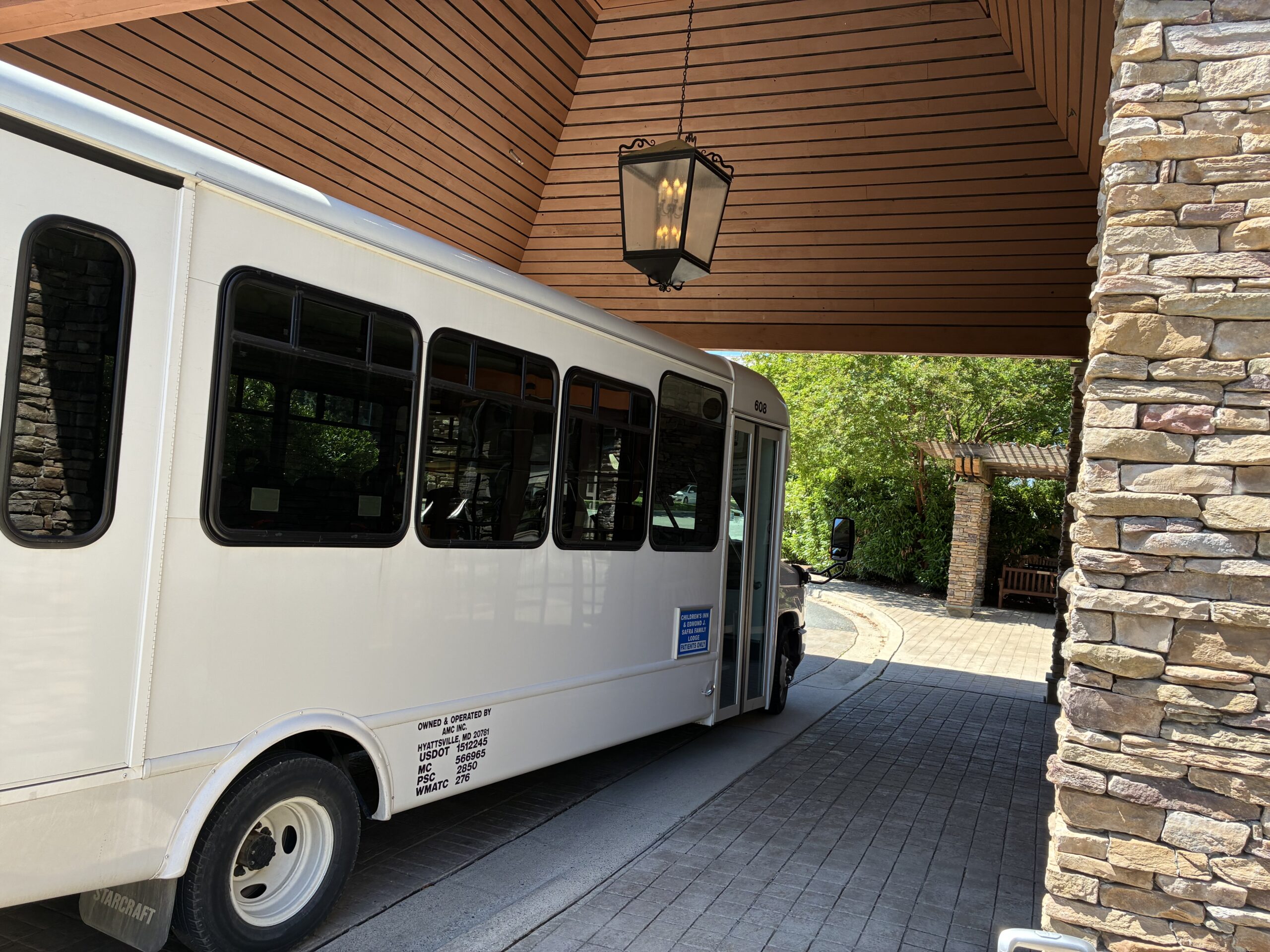
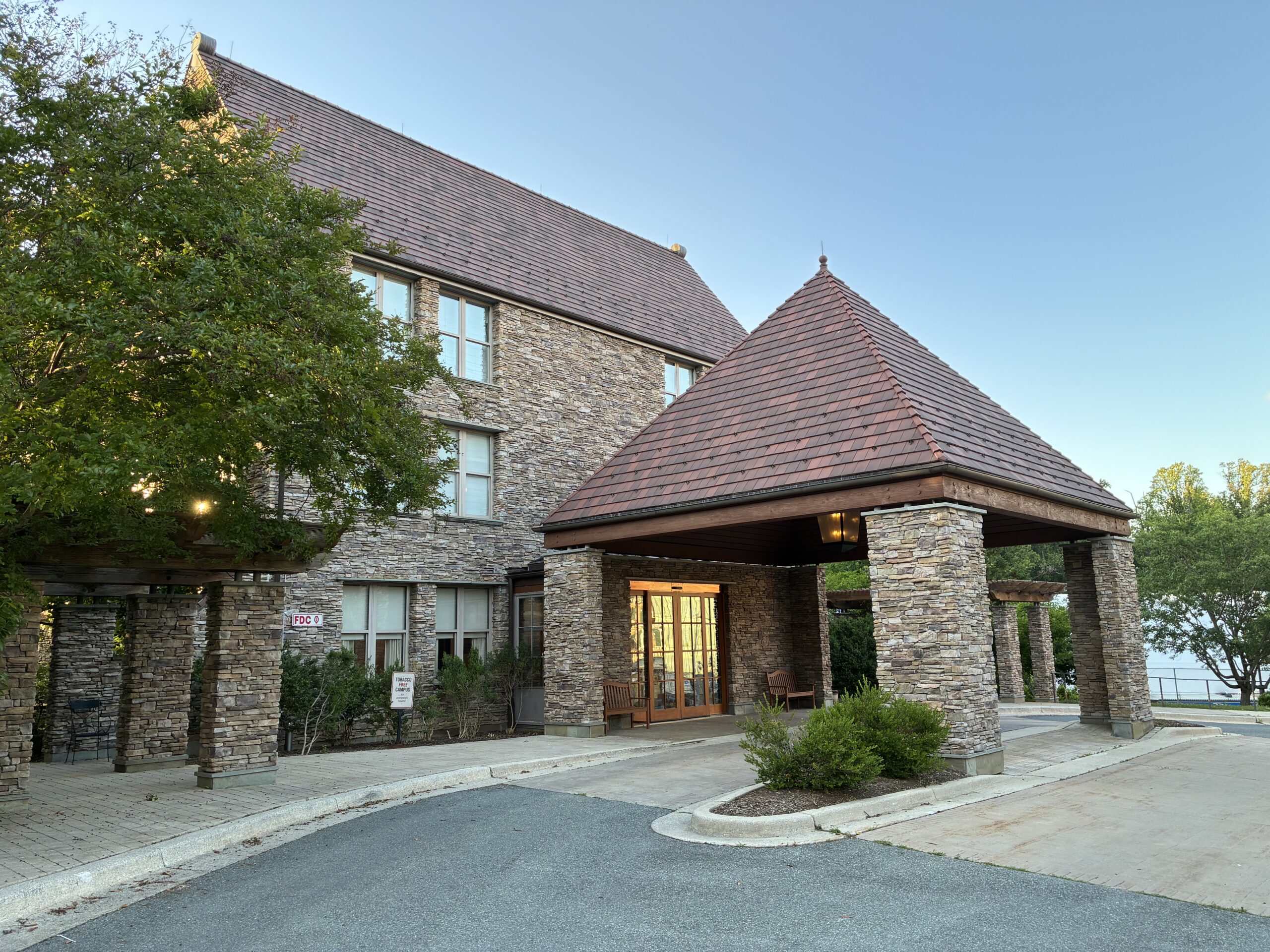
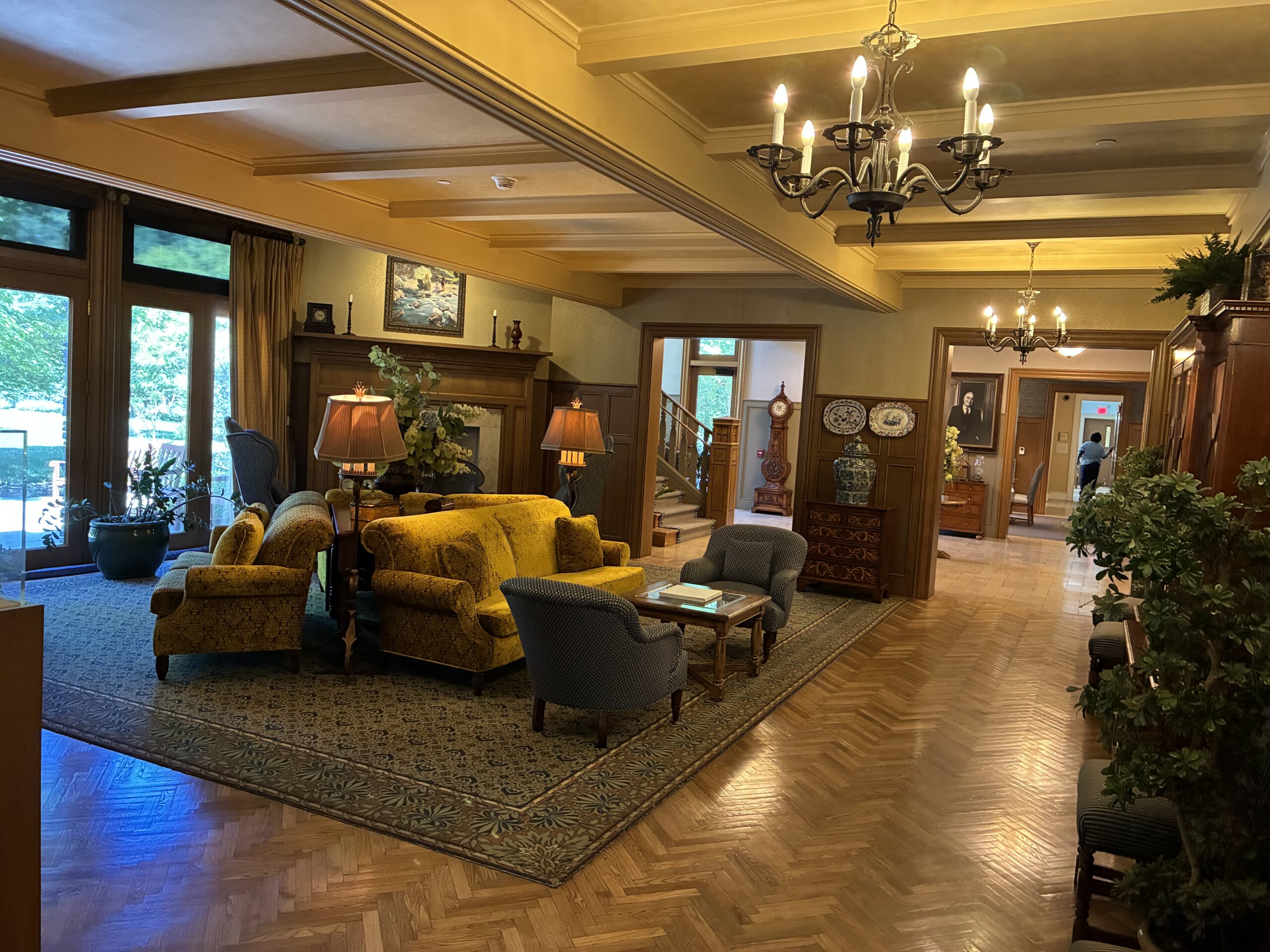
I must say that things have changed since I visited in 2008. The Clinical Center has a beautiful atrium with a help desk, Starbucks, and comfy seating. The Safra Family lodge feels like I’m walking into a Jane Austen novel with its brick stone exterior and antique decor. Furnishings are beautiful, the grounds are lovely with a walking path and outdoor seating to enjoy, and the communal kitchen is well stocked with food, coffee, tea, and everything you need to cook. The shuttle is a great help with regularly timed stops to the buildings and the metro. I was able to settle in, enjoy a light meal, take a walk, and then end the first day with a soothing bath. Not a bad way to start what can be a stressful week. I am grateful.
Day 2
Thankful for an early bedtime last night. Today was packed with back to back tests which led to exhaustion. I managed to sneak in an afternoon nap which was helpful. The staff is incredibly friendly and treat patients with dignity.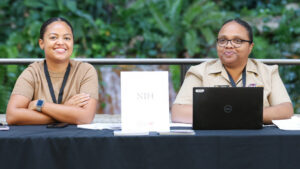
I have met three other LAM patients so far, but connecting has been a little more challenging than what I expected. Before the family lodge was built, LAM patients were all housed together in the hospital. There was a natural rhythm to seeing one another, striking up conversations, and connecting. This is a note to myself for any future visits to reach out on Lammies in advance to see who might be attending.
This evening I got to experience the legendary Dr. Joel Moss, MD, PhD, meeting with patients. LAM Liaison and longtime LAM community member, Mary Stojic did an amazing job sharing information about the many resources offered by The LAM Foundation, along with a little swag for attendees. She has such an easy, welcoming way about her that immediately puts people at ease and makes them feel included.
T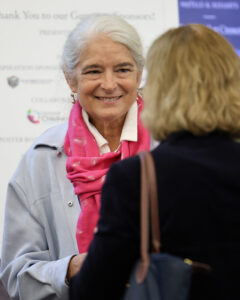 ogether, Mary and Dr. Moss provided updates on several topics, including research progress on development of a continuous flow portable oxygen concentrator, the SOAR Act, advances in MRI & CT imaging, and pulse oximetry. Afterward, Dr. Moss opened the floor for questions. He talked about how much he has learned and continues to learn just by listening to patients. The work he has done, and continues to do, in response to patient needs is remarkable. His goal is to keep LAM patients as healthy as possible for as long as possible. A gift to our community.
There was what seemed to be, a newly diagnosed patient in the room. I recognized the fear and look of being overwhelmed in her eyes and demeanor. She remained withdrawn from the rest of the group. I hope one day she finds peace with this journey.
Tomorrow morning is research bloodwork – evidently I will be donating quite a bit!
Day 3
This day was rough. The goal with the morning research draw is to fill ~23 vials. I tend to be a “tough stick” and my veins give out, but I managed to donate a cool 18 with the help of Ralph the technician. “Tired” is putting it a mildly after that marathon. Thankfully, the phlebotomy waiting room includes fruit and other snacks as well as a fresh pot of coffee and hot tea. An echocardiagram and brain MRI rounded out the day before my discharge summary with Dr. Moss and Nurse Practitioner Patricia Julien Williams.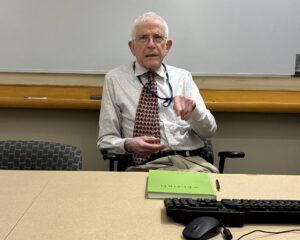
I have been so appreciative of Nurse Practitioner Patricia and her communication with me over the last couple of days, she notified me of any schedule changes and answered any questions I had. I was glad to have some time in between appointments to sneak in a zoom work meeting and lunch at the cafeteria.
The drumroll moment of the week was my late afternoon meeting with Dr. Moss and Patricia. There is a large video screen where they “play” my CT scan like a movie. I was told this will be available via CD for my pulmonologists viewing. Not unexpected, some of my numbers were low, others looked good. There will be follow up with my pulmonologist. Dr. Moss encourages patients to go over their results with their local doctors and is available for consultation as needed.
One of the topics we discussed was the importance of adjusting sirolimus dosage when a patient is not responding as expected. Dr. Moss explained that many factors go into that decision, which is why he encourages patients to have ongoing conversations with their physicians and, when possible, participate in the NIH protocol.
Adjusting treatment has the potential to extend the effectiveness of sirolimus, making it important to continue monitoring disease progression and response to therapy. He shared the story of one patient who began treatment at 2 mg and gradually increased to 7 mg before finally seeing a meaningful response and stabilization of pulmonary function tests.
Because each of us responds differently to treatment, staying informed and having open discussions with our healthcare providers is essential. At the end of the day, we all share the same goal—to live the longest, healthiest lives possible.
I must confess, I had a little cry tonight. The weight of results and the emotional/physical exhaustion of the day took its toll. I fixed myself dinner in the communal kitchen and once again enjoyed the patio seating outdoors. Maryland is beautiful right now with rich greens and a few flowering trees. The birdsongs and the beauty of nature all reminded me to center, live in the moment, and live in hope.
Tomorrow I will repeat one of my bloodtests and meet again with Dr. Moss to discuss moving forward.
Day 4
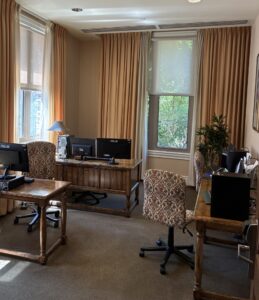 Only a few more hours to home…While the bed has been very comfortable, the accommodations lovely, and the people friendly, I am ready to go home with all its comforts. I awoke once more to visit phlebotomy. It was surprising how few people were there on a Friday. Evidently the majority of tests and patients are there Monday through Thursday. First stick was a success and I appreciated the friendliness of the technician.
Following breakfast and a bit of work via computer, I took a trip to the records office and stopped for lunch in the cafeteria. Imagine my surprise, when our very own Dr. Moss was in the cafeteria as well. We evaluated the various menu options, settling on a healthy rice bowl. We are to meet again in the afternoon once my bloodwork, echo, and MRI results are available.
That afternoon, as I sat with this research giant and reflected on my interactions with him for almost 25 years, I felt compelled to thank him. Throughout my journey with LAM and in my role supporting patients at The LAM Foundation, Dr. Moss is a stand out in the way he respects, values, listens to, and acts on the patient voice. It is at the core of who he is. It shows up not only in his work at the NIH, but wherever LAM patients gather. Whether it’s a LAMposium in Your Living Room session, a conference, a Tuesday night meeting, or simply taking the time to answer a phone call or question, he is fully present and engaged. I wish I could clone that approach. Thank you hardly seems adequate…
As I waited for my shuttle to the airport, an Open Taxi pulled up dropping off a newly arrived patient. Out of the corner of my eye I saw Nico – running to give me a parting hug. A serendipitous and precious way to end the week.
Resources
More Information on NIH trials
What you Need to Know About Your NIH Visit
If you are interested in learning more, please contact:
Tat’Yana Worthy, RN, MSN
Research Nurse Specialist, National Institutes of Health
(301)-496-3632 (o)
TAT’YANA WORTHY, RN MSN
Study site: Bethesda, MD
Visit https://go.usa.gov/xuuz9 for more details.
*Editors Note: “Nico” is an alias used to protect the privacy of this individual.