The Sky’s the Limit for one Lammie who is Grateful for Advancements in LAM Care and Treatment
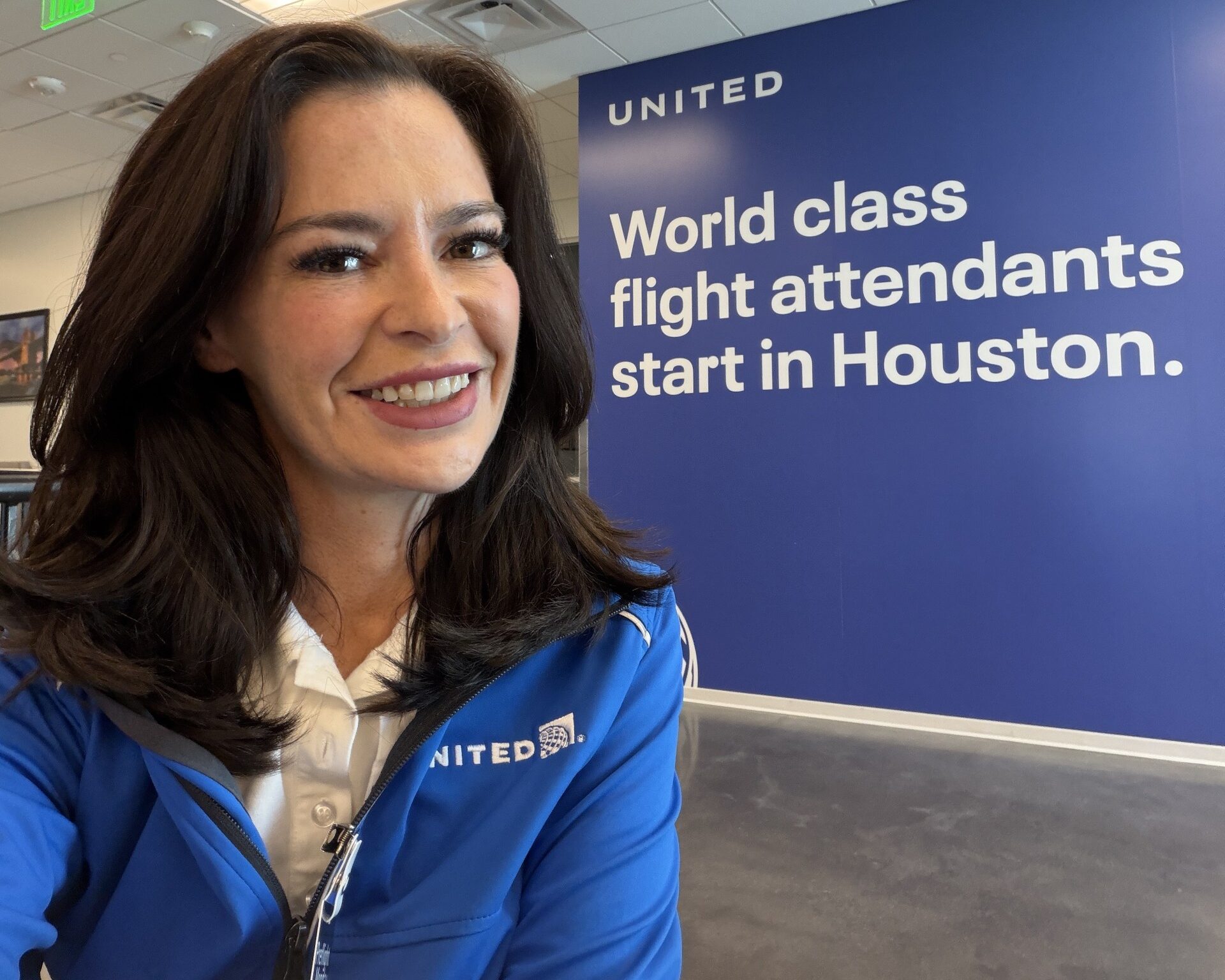
When Kat was diagnosed with LAM nearly 13 years ago, shortly after the birth of her first daughter, she didn’t know what the future would hold. Today, she is proving that a LAM diagnosis does not have to define what is possible.
Kat lives in a 120-year-old Victorian farmhouse in northern Virginia with her two daughters, Emma, 14; and Sloane, 8. They’ve resided in their Loudoun County home for just over a decade with their two cats, a dog, and a half-Arabian horse named Jellybean. Kat keeps busy raising her family and chasing a dream she never expected to have: a career in aviation.
“I feel lucky to be here,” Kat says. “The reason I can even think about this career is because of everyone who came before me.”
Kat spent her early career in the service industry before earning an undergraduate degree in Media and Communications (Muhlenberg College) and a Master’s degree in Secondary Education/English Instruction (George Mason University). She previously taught high school English and loved it, but craved more. She wanted to expand her teaching experience beyond the traditional classroom, which steered her toward considering corporate instruction.

When she learned that a United Airlines training center was opening near her home, something clicked. She wanted to become an instructor. But first, she knew she needed real experience as a flight attendant.
The process has included interviews, tests, and months of preparation. After an injury delayed her first training opportunity, Kat is finally getting ready to head to Houston this summer for flight attendant training.
For Kat, this career is about more than travel.
She knows firsthand how important airline safety is. She once experienced a collapsed lung while flying, one of the serious complications that can happen with LAM. As she trains, she hopes to be an advocate for passengers with invisible illnesses and better understand the safety procedures that help protect everyone on board.
Living with LAM isn’t always easy. Her disease has progressed and is now considered moderate. Virginia’s hot, humid summers can be especially challenging. But thanks to treatment with rapamycin and the expert care she receives through her yearly visits to the National Institutes of Health, Kat continues to live a full and active life.
Most importantly, she gets to watch her daughters grow.
Kat knows that wouldn’t have been possible without decades of research, generous donors, dedicated scientists, and women with LAM who came before her and participated in research studies and clinical trials.

She proudly displays a license plate that reads “CURE LAM,” a reminder of the hope she carries every day.
It’s also a feeling that she enjoys sharing with those who reach out to her via social media.
“When I can give someone hope,” Kat says, “it feels like I’m paying it forward.”
Kat’s journey is a powerful reminder of what is possible when a community comes together. Every research study, every donation, every volunteer, and every person who shares their story helps create a future where women with LAM can continue to dream bigger.
Because of those who came before her, Kat is reaching for the skies. And because of the work we do together today, even more women with LAM will have the chance to do the same.
Want to join Kat and support the people, programs, and progress that are transforming life for those living with LAM?